Granting access to Topics after a Discussion Period ends.

3 types of interaction explained
3 types of learner interaction

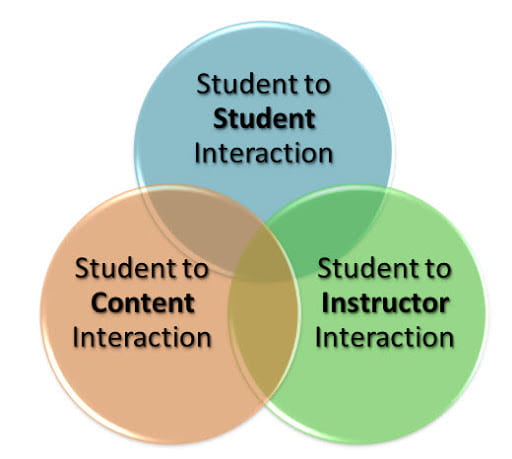
A question that I receive from time to time from instructors is how they can grant “special access” to a course discussion, after the initially assigned discussion period has ended. My response is typically a bit detailed, because I want to paint a picture for why this is not an available option in iCollege. Discussion topics are essentially a type of interaction between two or more learners. There are (3) types of interactions, as they relate to teaching and learning. One being (student-to-student). Discussion topics are a common method for meeting this objective. The goal is to mimic what would take place in a traditional classroom setting. However, in this case, we are referring to an online classroom, whereas students communicate asynchronously (not in real time) with one another on a given topic. With that said; In order for the interaction (discussion) to be meaningful, students must be engaged during the same period, with an ability to communicate by posting and replying to one another (during the estabilished discussion period). It’s like holding a class on-campus that ends at 11:00 am on Monday and having a student show up for class discussion on Wednesday at 2:00pm, after the discussion has ended and no one is there to receive and respond to their comments! To accommodate this student, you would need to re-open the classroom (discussion) for others to attend, which would be inappropriate and therefore unfair to the remaining students. For this reason, you cannot (open) nor (re-open) a discussion for an individual student. Please share any questions in the comment area, or feel free to contact me via email in order to meet for a more in-depth converstion and to explore additional options and available resources.

Keeping Students Engaged in Online Discussion

Setting the expectations early on is of great importance when it comes to student engagement. For discussions, using a rubric can be very helpful in meeting the goal of making expectations very clear to students. A benefit of using rubrics is that students get to view the rubric before completing an assignment and can gain a clear understanding of what the expectations are. One of the biggest challenges appears to be of students who have a tendancy to become laggards–those who wait until the last minute to post. This causes frustration to those who are diligent and post early but must wait for others to “engage” in the conversation. So, one of the main (criterion) that should be included in the rubric to measure engagement, should weigh heavily on how early in the week students post and reply to classmates. Reward students for posting early and often!

Another factor is to show instructional presence as much as possible through the concept of Regular and Substantive Interaction (RSI). Showing instructional presence is important, particularly with discussion. Monitoring and sharing additional context throughout the discussion activities, provides sustansive and ongoing interaction.

Be sure to use thought provoking questions that are designed to keep students engaged. Provide students with a list of the elements needed to successfully post and reply to a discussion, and reflect this information within the grading rubric.

Consider also rewarding students for posting more than is required.

This may vary by the subject matter, but for the discussion prompt, try to allow for students to share ideas and opinions based on personal insight and/experiences. This tactic could help limit one’s ability to incorporate (Ai) generated responses within their discussion posts, while further encouraging students to use their active learning and metacognitive skills.

Technology & Society: Are You an Early Adopter?

Someone once said that, “Haste makes waste”. I’m not sure that I universally subscribe to this idea, but in the world of technology integration, there’s a great deal of validity to that statement. There’s another saying that refers to Aesop’s Fable, “The Tortoise and the Hare”, whereas the most anxious and aggressive don’t always come in on top. Well with that said: Perhaps the Early Bird does get the worm, but whether it’s the best and most gratifying worm may be yet another story! These observations carry a great deal of weight with regard to how new technologies are distributed and adopted by today’s consumers.

Today we live in an environment where new product ideas are researched, designed, developed, and distributed to an international consumer base in record time. The research and development phase’s of producing new products and technologies is indeed a costly and time-sensitive endeavor. In fact the practice of developing, producing, and marketing new products to consumers is enormously expensive. Therefore the faster products are marketed and sold, the quicker companies will receive a return on their investment. Both publicly held companies (those listed on the various stock exchanges and are owned by groups of shareholders), and private entities share the challenge of creating a positive cash flow situation as fast and as efficiently as possible. Investors, including stock holders, banks, private equity and other entities, have a vested interest in the rapid diffusion of new technologies to the market. However there are sometimes inherent problems that may potentially effect quality, and the end user (consumer) can be left holding the bag. Therefore the methods with which new products and services are marketed, distributed and sold, may not always in the best interest of consumers.

In the business environment, the approach to adapting new products and technologies is extremely conservative. Businesses rely on efficiency and productivity to turn a profit. They have little time for experimentation and little patience for ironing out problems and other challenges related to organizational change. For example: When new versions of a computer operating system such as Microsoft Windows or a new mobile device such as an iPhone is introduced to the public, information technology professionals are almost paranoid toward immediate plans for any wide-spread adaptation or implementation. Business organizational networks are not social networks. They are mission critical tools for managing data and distributing other important information. A premature introduction of technologies can often prove problematic due to limited research and development, and/or a lack of proper usability testing in “real world” work environments. Therefore it is the consumer base that is often charged with experimenting and uncovering technical issues.

New technologies often fail or are unstable under certain conditions. The perception may be that consumers have a much greater threshold for dealing with problems associated with newly introduced products. For this reason, and by default, consumers who are quick to purchase the latest and greatest products as soon as they become available, often pay a premium in terms of quality and costs. As an early adopter, you may be faced with immediate updates, upgrades and performance and even security issues. Additionally and perhaps more significantly, you will almost surely pay a premium with the highest price for a given product.

Having obtained the latest and greatest new product or gadget may be self-ingratiating in terms of social status and popularity, but in the larger scheme; Ask yourself, is it really worth the extra costs associated with being an early adopter?

Incorporating Instructional Design Principles when Creating Learning Content

Educators and other subject matter specialists understand that developing clean, concise and relevant learning content is anything but arbitrary. The process involves a great deal of thought, insight and judgment as it relates to the information being gathered and presented. A variety of processes and tasks help us to assemble our thoughts and ideas, and to build upon our expertise in order to effectively share knowledge and information with learners. The goal is to identify specific needs, develop solutions, and to examine the outcome of our efforts based on predetermined criteria. These steps are essential to the development of an effective instructional strategy.

A great deal of research has been conducted regarding the processes of designing and assessing educational resources and learning outcomes. Instructional design models incorporate methods that are from the relatively simple to the more complex. These methods include Concept Mapping, the ASSURE Model, Criterion Referenced Instruction, the ADDIE Model as well as many variants.

One of the more prevalent instructional design models uses the ADDIE acronym for Assessment, Design, Development, Implementation and Evaluation. However this representation does not fully address an important phase that relates to the teaching and learning processes—which should include ongoing maintenance of the learning resource.

Having a solid instructional design plan is an important factor for assuring that learning goals have been met, but does not require you to necessarily be a professional instructional designer. The most important point is having a clear understanding of the specific need(s) being addressed prior to attempting to facilitate a solution or learning intervention, from a micro and/or macro level of the instructional lesson, unit, chapter, section, course, or program.

An instructional design process should be conducted in a non-linear fashion. This means that processes and steps should be revisited as necessary throughout the process. However a needs assessment should be clearly established in order to determine why and what the instructional focus will be from the onset, prior to moving forward. Following these basic steps will go a long way in assuring that instructional goals are being met in an efficient way that is most conducive to meeting educational goals through clearly established learning objectives.

Overcoming Trepidation in relation to Online Teaching and Learning

One of the most considerable factors for faculty to overcome during a transition from traditional to online teaching and learning is the trepidation that one might experience. This is quite common. A great deal of research and applied practice has helped to alleviate many of these concerns. We have indeed come a long way in the last twenty years. Of primary concern are the environmental conditions that relate to student engagement and interaction in the classroom and how it compares to online teaching and learning.

There are several factors that one must consider in order to address these common concerns. Certainly the “Art of Teaching Online” (Pedagogy) requires a different approach to traditional classroom learning spaces, with regard to how we communicate or otherwise show instructional presence. There are at least (3) factors that are necessary components in order to assure a better learner experience. They include (Organization, Information and Interaction). In terms of learner (interaction), we have (3) primary principles which include (Student-Student, Student-Instructor and Student-Course Content)

As it relates to interaction, the traditional “threaded” discussion is becoming somewhat archaic in certain regards. Now this is not to say that it is not useful. It is absolutely still relevant as an effective online learning resource. However we now have additional resources that have been developed based on further research related to the aforementioned points regarding (Student-Student, Student-Instructor and Student-Course Content), that provide additional support beyond a basic asynchronous online discussion forum.


Student Interactions for Online Teaching and Learning

Providing adequate opportunity for student interaction is an great importantance. There are (3) types of interaction, as it relates to teaching and learning. They include: 

Student-Content
Student-Instructor
Student-Student

To be effective, and online course structure must provide ample opportunity for all (3) modes of interaction, including the (student-student) aspect through discussion, collaboration, etc. How do you effectively increase interactive opportunities for  students in online courses, especially those who may be less motivated or struggle with self-discipline? 

Response: This may be one of the greatest dilemmas we currently face in education, especially so,  but certainly not limited to online courses. My background and understanding of instructional design tells me that there are some deep behavioral issues that drive student motivation–or lack there of, based on many factors, but here are a few ideas that may prove to be helpful for many students.

– Ask engagement-based questions. These types of questions often motivate students to become, for a lack of better terminology, I’d like to say “emotionally involved” in the topic of discussion.

– As an assignment or discussion, ask student to provide a reflection on the experience and the knowledge they have acquired.

– Use (Intelligent Agents). This is an iCollege feature that can be used to communicate with  students by sending them a message to alert them that an assignment is closing, past due, late, etc., and can be very helpful in many cases.

– Include some more engaging and interactive components such as lecture videos, but be sure to break them down into chunks of information for specific topics. As a best practice keep them no more than 5-6 minutes–if possible. Long videos of 45 min or more is not a good idea, but sometimes you cannot get around it.

– Include some formative evaluation in the above mentioned videos. This can be low-stakes quizzes, or even extra credit, to enable both you and the students to measure their understanding throughout the teaching and learning process. You can capture the scores and include and/or exclude them from the grades calculation. Kaltura Quiz and PlayPosit are two resources that we currently have available.

– Release a (current grade average) to students throughout the semester. There’s some psychology in this as it relates to human behavior, but I believe this may have an emotional effect on students to stay actively engaged and increase their interactions, motivation and overall performance.

Increasing Student Engagement and Interaction

Learning at a distance has proven to be effective when certain characteristics are properly incorporated within the course structure. Modern learning management systems (LMS), such as iCollege, have evolved in order to better facilitate learner engagement. This facilitates a important requirement in addressing the needs of the student, as well as an essential need for faculty presence.

Online teaching and learning, although distinct, offers similar traits to traditional face-to-face classroom instruction. In order to be effective, certain characteristics must be present. One important factor is to offer a strong instructional presence as it relates to student engagement and interaction, in order to limit isolation and inevitably frustration both from an instructional perspective as well as for individual learners.

The University offers a wide array of resources that support student engagement. What is student engagement? This topic, as it relates online teaching pedagogy, can be defined as; The Art of finding ways to show presence without actually being physically present. An important role for the online educator is to address specific instructional needs with resources that are available in order to increase student-student as well as faculty-student engagement and interaction.

Methodologies used to address isolation and disconnection as it relates to online teaching and learning.

Two primary approaches:

  • Observation: (reading e-mails, discussion posts, viewing content lectures and documents)
  • Application: (posting to discussions, writing e-mails, taking quizzes—particularly those that provide feedback).

Internal/External Learning Tools

  • Within iCollege
  • Linked to iCollege (plugin)

Asynchronous/Synchronous Communications

  • Discussions

Email

  • Web Conferencing

VoiceThread

  • Record content from webcam
  • Upload media, documents
  • Voice Record (telephone, microphone)

Kaltura

  • Upload video content etc.

Camtasia video content (interaction/quizzing)

  • Develop lecture videos etc.


Personalizing your message

  • Replace Strings
  • Intelligent Agents

Incorporating Multimedia Elements into Online Courses without Overwhelming Students

Utilizing best practices when incorporating multi-media content is of enormous importance. This was true 25 years ago, and it is as true, or even more relevant today. There is lots of research which suggests that using too many elements can over-stimulate the human mind in adverse ways. This is commonly referred to as (Cognitive Load Theory) and it is I think a core element of addressing this topic. At minimum, specifically with regard to using video and other forms of interactive content, we have to be careful as to not overwhelm students/learners with too much information in order to prevent cognitive overload. One basic strategy has to do with the use of video content. Twenty years ago, or so, it was common to share video content with students with little consideration for the length of the video and the human ability to consume (non-entertainment based) data and information in the form of instruction, lecture, etc. I’m not sure why. Video has been used in higher education for a long time. Early stages of distance learning (before  learning management systems like iCollege, Canvas, etc. were introduced), used video as a primary means of sharing information. It was not uncommon to record and share entire class or lecture sessions of an hour or more with students for asynchronuse review. At some point, maybe 15 years or so ago, it was suggested and became common practice, that videos should not be more than 20 minutes. Later it became 15 minutes and at some point, in the last 10 or so years, it has become more pedagogically acceptable to break content down into smaller (chunks) of no more than 5 or so minutes.  Now, I’m not sure if this is a reflection of how students have become less focused or what, but It’s clearly had a more positive impact on a learners ability to retain information, long-term. Video-based lecture materials work best when the content is broken down into sub-sets of a topic that can be more easily identified, accessed and consumed by learners!

Of additional importance is ensuring that multimedia content is accessible to all students, including those with disabilities. GSU has gone through great lengths to provide a high-level of support with regard to meeting this most important requirement, not just at the state level, but as a federal requirement. We have a full-time Accessibilites Specialist on our team, Dr. Spring Brennan, who coordinates these activities. In addition to the Mastering Online Teching course, we also offer a Mastering Accessibilities course that covers Universal Design for Learning (UDL). Look for email announcements for any upcoming events and course offerings.

Considerations for Managing your online Gradebook for the coming Semester

[et_pb_section admin_label=”section”]
[et_pb_row admin_label=”row”]
[et_pb_column type=”4_4″][et_pb_text admin_label=”Text”]Background
A variety of methods used for managing and sharing student grades have preceded current forms of online grade books. Today this process is largely accomplished through the use of robust Learning Management Systems.  In the past, managing grades online was mostly optional and at times even highly restricted due to security concerns.  Current learning management systems, such as iCollege (Desire 2 Learn), do a very good job of managing student grades.

Reasons to Consider
Advanced integration methods with course content such as quizzes, discussions, assignments, etc., provide measures to post grades, along with comments to students in a secure and flexible learning environment. Additionally online grade books are useful for online as well as hybrid and face-to-face courses, allowing the option of exporting student data to a spreadsheet for backup and/or further dissemination. These are some of the reasons why the iCollege grade book function  should be considered a viable tool for managing grades. Getting started early with setting up your grade book is an important consideration prior to beginning the semester.

Following are a list of  additional considerations for managing your grades through the iCollege grade book.

1.    Prior to the beginning of the semester, it is a best practice to setup a new grade book, or to import grades items and settings to your new course from existing courses. Completing this function in advance will allow adequate time for tweaking or adjusting the grade book to meet your current needs. Leveraging existing Grade Items and Settings that have been imported (along with other course content) for use in future semesters, in part or in its entirety, is a powerful feature that can save a lot of time and effort down the road.

2.   Consider using the iCollege grade book for face-to-face courses as well, prior to the beginning of the semester. The grades function provides seamless connectivity for student assessment: An example of this would be through the assignment tool, which can be used to assess written assignments, provide comments and feedback, and to post a grade for students to view immediately or a specified date and time.

3.    Prior to the beginning of a new semester, complete a through review and test your grade functions making sure that the grade book structure matches the information being presented in the course syllabus. This will derail any potential challenges that may occur from student questions regarding final grades calculations.[/et_pb_text][/et_pb_column]
[/et_pb_row]
[/et_pb_section]

Online Course Development Considerations

Developing an online course, is similiar to a building a website. It is not a linear process, as we are constantly examining , revising and tweaking our choices. As we gain more insight and information, we may return to a previous point for further consideration, before jumping forward and continuing where we previously left off. This process involves some of the best practices that have proven to be helpful, but we are also uncovering ideas that we discover along the way. An example is with the advent of Artificial Intelligence. Ai is forcing us to revisit certain aspects of our instructional and assessment processes. Depending on the discipline, we might have to focus more on learner experiences and ask students to articulate responses in a way that would be extremely difficult for a simple Artificial Intelligence chatbot response–based on specific examples covered in class, that require student’s to be actively engaged in the gathering and sharing of information. Lots of people are researching this and developing new ideas and methods. Look for emails and visit the CETLOE website for upcoming events.